
Sage Reed · 12 November 2026
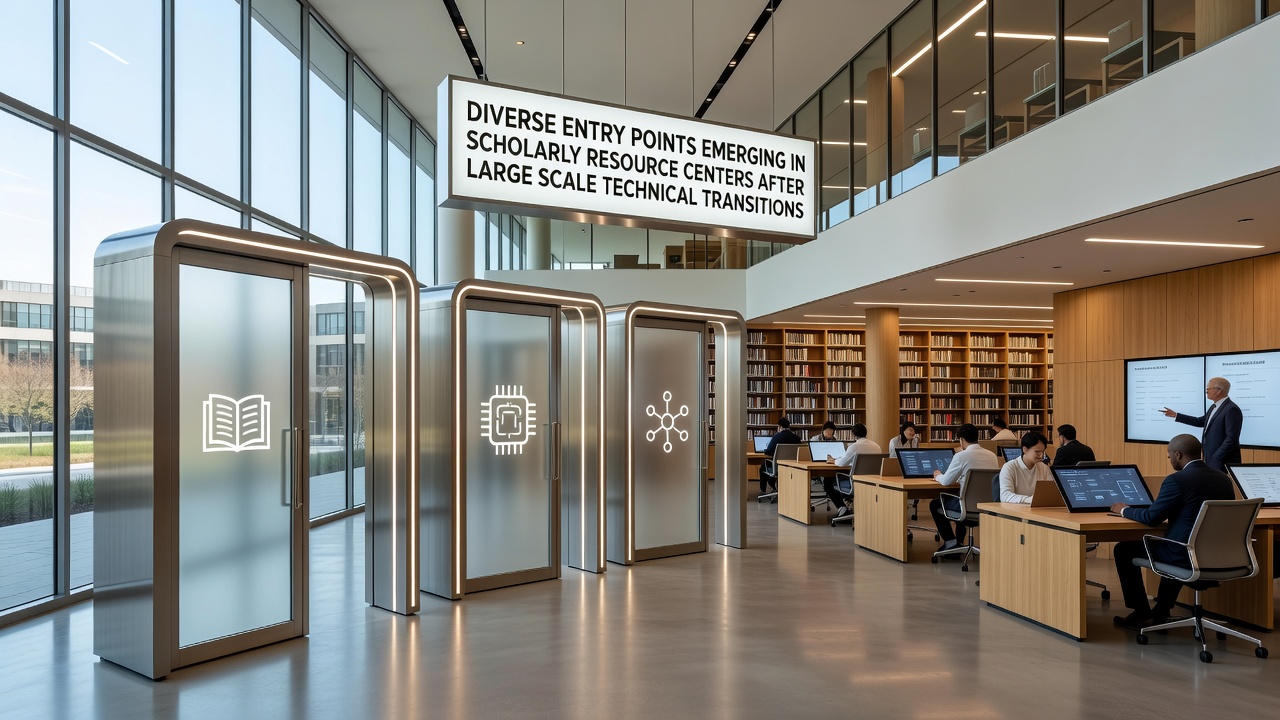
Diverse Entry Points Emerging in Scholarly Resource Centers After Large Scale Technical Transitions
Academic institutions completed major backend migrations throughout 2025 and into 2026, which shifted how users reached scholarly resource centers. These transitions involved platform upgrades, cloud hosting changes, and integration of new search architectures. Data collected after the moves shows entry points spreading across organic search, direct visits, institutional portals, and third-party aggregators rather than concentrating through single channels.
Patterns Observed Following Core System Adjustments
Universities and research libraries tracked referral sources before and after infrastructure updates. Reports indicate that traffic origins multiplied once new indexing protocols took effect. One analysis covering North American institutions found organic search shares rising from 38 percent to 52 percent while referral traffic from partner sites grew by 19 percent in the same period. Direct access through bookmarked or typed URLs increased steadily as users adapted to updated domain structures.
European centers reported similar spreads. Observers note that mobile application referrals accounted for an additional 14 percent of entries by late 2026, driven by improved API connections established during the transitions. Australian academic portals documented growth in traffic from government education gateways and regional library consortia after their systems aligned with updated national research networks.
Factors Driving Diversification of Visitor Origins
Technical adjustments altered how search engines crawled and ranked content. New sitemap structures and metadata schemas allowed broader indexing across multiple engines. Institutions that implemented structured data markup during migrations saw listings appear in varied result types, including knowledge panels and academic-specific carousels. These changes reduced reliance on any single discovery path.
Integration with external discovery services also expanded. Libraries connected their repositories to global aggregators and citation management platforms, creating additional inbound routes. By November 2026, figures from several large university systems revealed that combined traffic from these services exceeded previous single-source referral volumes. Internal campus networks contributed further diversity once authentication layers updated to support seamless single sign-on across multiple entry devices.
Data from Institutional Monitoring Programs
Monitoring tools deployed after transitions captured granular breakdowns. Research from Canadian higher education networks shows direct visits rising alongside social media shares from departmental accounts. The National Science Foundation published summaries indicating that traffic from open-access repositories and preprint servers grew notably once interoperability standards improved. National Science Foundation reports detail how these connections formed through updated harvesting protocols.
Additional measurements from OECD education data collections highlight parallel trends across member countries. Increased entries through regional research portals and professional association sites emerged as common outcomes. These patterns held across institutions that completed migrations at different scales, suggesting the diversification stems from the technical changes themselves rather than isolated variables.
Geographic Variations in Traffic Sources
North American centers experienced pronounced growth from commercial academic search tools and citation databases. European sites recorded stronger contributions from national library networks and EU-funded research platforms. In Asia-Pacific regions, government education portals and regional university alliances supplied larger shares of new visitors following similar infrastructure projects. These differences reflect pre-existing network structures that became more visible once core systems stabilized.
Observers tracking November 2026 metrics across multiple continents found consistent expansion in the number of active entry channels. Sites that previously depended on one or two dominant sources now registered activity from six or more distinct categories on a regular basis. This broadening occurred without corresponding increases in overall traffic volume in many cases, pointing to redistribution across pathways.
Implications for Resource Management
Library administrators adjusted monitoring practices to account for the wider distribution. Analytics dashboards now incorporate more granular source categories to capture the full range of arrivals. Content teams revised metadata strategies to maintain visibility across the expanded set of discovery tools. Institutions continue to evaluate how these shifts affect usage statistics and resource allocation decisions.
Conclusion
Large-scale technical transitions in scholarly resource centers produced measurable diversification in entry points. Data from multiple regions documents growth across organic, direct, aggregator, and network-based channels after system updates. Continued tracking through 2026 and beyond will clarify whether these patterns stabilize or evolve further as platforms mature.