Vera Lorenz · 29 October 2026
Exploring Evolving Visitor Sources for University Knowledge Bases After Large-Scale Hosting Transitions
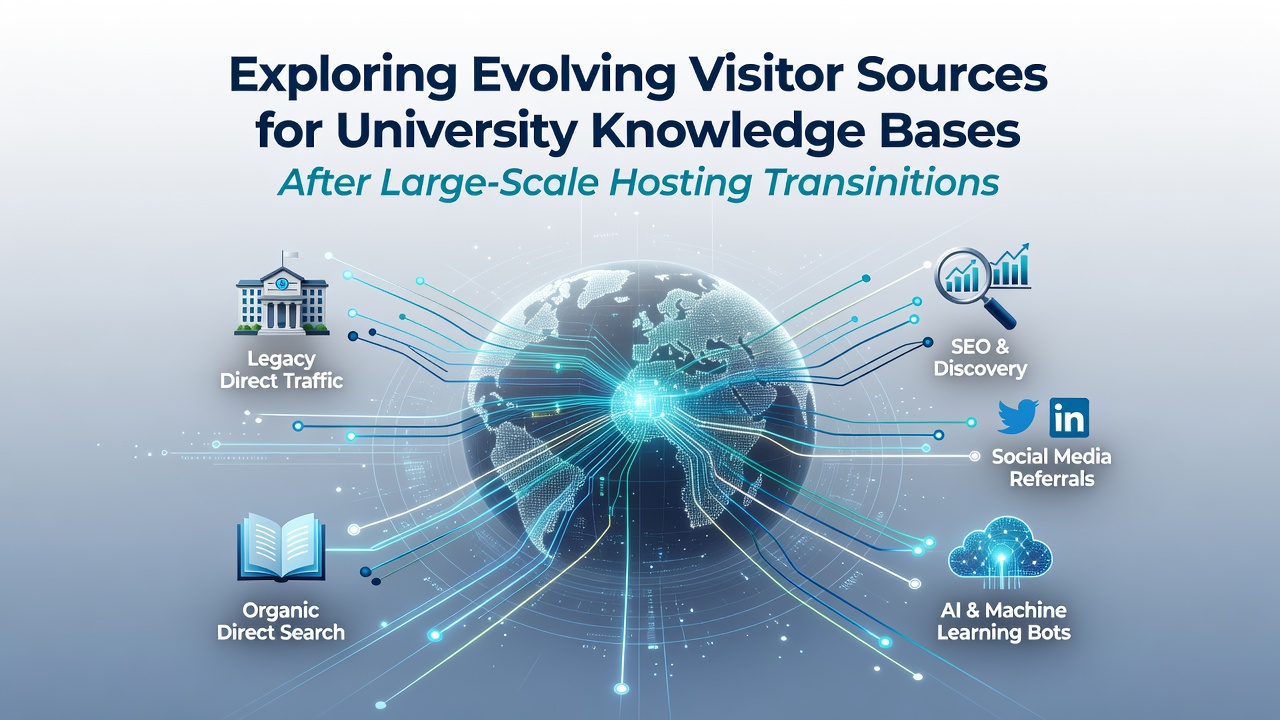
University knowledge bases undergo notable changes in how visitors arrive after institutions complete large-scale hosting transitions, and these shifts often emerge within weeks of the migration date. Data from multiple academic portals show that organic search traffic frequently experiences temporary dips while search engines reindex the new infrastructure, yet referral patterns from partner sites and internal university networks tend to stabilize more quickly.
Understanding Initial Traffic Realignments
Hosting migrations involve server relocations, domain adjustments, and backend optimizations that alter how external systems recognize and route users to academic resources. Observers note that direct traffic often rises in the first month because bookmarks and saved links continue to function without interruption, whereas paid search campaigns require manual updates to tracking parameters before full performance returns. Researchers at several institutions tracked these patterns through analytics platforms and found that the volume of visitors arriving via mobile apps connected to university systems remained consistent even during the transition period.
Referral and Partner-Driven Arrivals
Partner universities and library consortia generate a steady stream of referral traffic that sometimes increases after migrations because updated hosting configurations improve page load speeds and reduce bounce rates from linked resources. Studies indicate that when institutions move to cloud-based platforms with enhanced security protocols, external sites linking to knowledge bases experience fewer broken connections, which supports sustained referral flows. One analysis of European academic networks revealed that referrals from government education portals grew by measurable percentages in the quarter following infrastructure updates completed in late 2025.
Academic libraries frequently adjust their internal linking strategies during these periods, and the result appears in diversified origin points that include both on-campus networks and remote access services. Data collected through October 2026 demonstrates that visitors arriving through library discovery tools maintained stable proportions despite the broader hosting changes, suggesting that authenticated access points function independently of public search indexing cycles.
Search Engine and Organic Channel Developments
Organic search sources evolve as crawlers adapt to new server locations and content delivery networks, and this adaptation process can span several weeks. According to figures released by the National Center for Education Statistics, educational websites that completed migrations in 2025 recorded initial declines in search impressions followed by recovery phases that aligned with improved mobile responsiveness on the new hosts. Those patterns continued into 2026, with some portals reporting higher proportions of visitors from long-tail academic queries once indexing stabilized.
Social media referrals represent another variable channel that institutions monitor after transitions because platform algorithms favor faster-loading pages. Research indicates that posts linking to updated knowledge bases receive greater engagement when the destination servers deliver content without latency issues common during migration windows. Universities in the Asia-Pacific region documented similar outcomes, where social traffic shares increased as hosting performance metrics improved.
Direct Access and Bookmark Persistence
Direct visits often constitute the most resilient visitor source because users who have previously saved URLs continue to arrive regardless of hosting provider changes. Analysts tracking university portals through October 2026 observed that direct traffic proportions held steady or expanded slightly when institutions implemented clear redirect chains and maintained consistent URL structures. This stability contrasts with fluctuations seen in paid advertising channels that require retargeting adjustments after domain or server shifts.
Email campaigns and internal communications also feed direct and referral traffic in predictable ways, and the effectiveness of these channels depends less on hosting location than on message timing and audience segmentation. Data shows that newsletters distributed by academic departments generate consistent click-through rates even when the underlying knowledge base infrastructure changes, provided the links remain functional throughout the transition.
Longer-Term Patterns Across Multiple Institutions
Over extended periods, visitor source distributions tend to diversify as new hosting environments support additional features such as integrated search tools and API connections to external databases. Institutions that migrated to providers offering advanced caching reported gradual increases in traffic from aggregator sites and research indexing services. The European Commission education reports note parallel developments across member states where updated infrastructure facilitated greater interoperability between university repositories.
Seasonal academic calendars influence these longer-term shifts because enrollment periods and exam cycles drive spikes in specific traffic origins that overlay the effects of hosting transitions. Observers tracking multiple sites found that the combination of calendar-driven demand and improved technical performance produced more balanced distributions across organic, referral, and direct sources by the end of the first full academic year after migration.
Conclusion
Visitor sources for university knowledge bases continue to evolve after large-scale hosting transitions as search engines, partner networks, and user behaviors adapt to the new technical environment. Data collected through October 2026 illustrates that while certain channels experience temporary disruptions, others demonstrate resilience or even growth when infrastructure improvements enhance accessibility and speed. Institutions monitoring these developments gain clearer pictures of how traffic origins redistribute across organic, referral, direct, and social pathways over time.