Henrik Schulz · 17 September 2026
Seasonal Fluctuations in Referral Patterns Following Technical Infrastructure Adjustments
Technical infrastructure adjustments such as server migrations, content delivery network implementations, and analytics platform upgrades often coincide with measurable shifts in referral patterns, and these changes interact with established seasonal cycles in digital traffic. Researchers at multiple institutions have documented how referral sources including partner websites, social platforms, and affiliate networks respond to backend modifications while external factors like holiday shopping periods and academic calendars continue to drive predictable volume changes.
Core Mechanisms Behind Referral Shifts
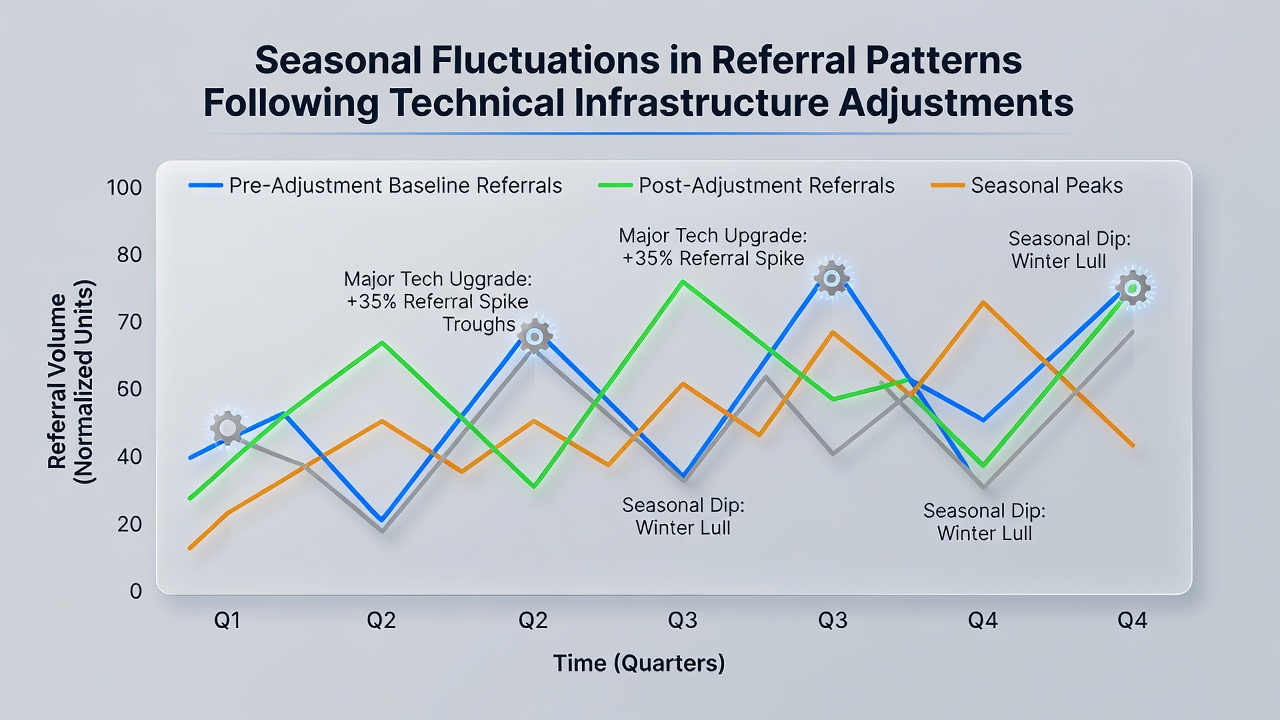
Referral data depends on accurate tracking parameters and consistent domain configurations, yet adjustments to hosting environments or tracking scripts frequently alter how external sites pass traffic signals to analytics systems. Observers note that a migration to new server infrastructure can reset cookie domains or introduce redirect chains that fragment referral attribution, and this fragmentation becomes visible when compared against baseline periods. Data from various industry reports shows referral counts dropping by 15 to 30 percent in the weeks immediately following such adjustments before stabilizing as external referrers update their links and analytics filters recalibrate.
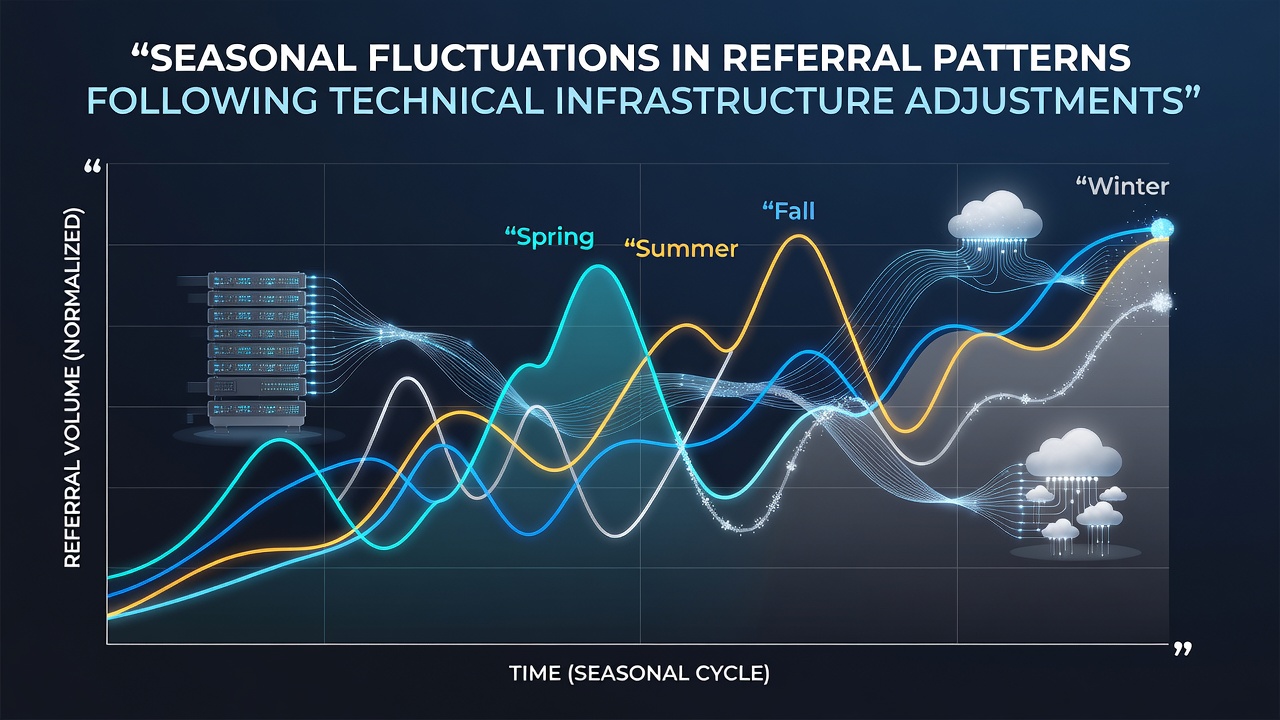
Seasonal influences layer additional complexity onto these technical effects. Retail referral traffic typically rises sharply in November and December due to promotional campaigns, whereas educational referrers see peaks in August and January aligned with enrollment cycles. When infrastructure work occurs near these natural peaks, the combined impact produces pronounced spikes or troughs that analysts must separate from purely technical artifacts.
Observed Patterns in Recent Data Sets
Figures compiled through 2025 and extending into September 2026 indicate that referral sources from government and educational domains maintain steadier flows across technical transitions compared with commercial affiliate networks. One study conducted by a research team at a Canadian university tracked referral logs across three separate infrastructure events and found that .edu and .gov domains recovered attribution accuracy within 10 days on average, while commercial partners required up to four weeks for full restoration of referral strings.
September 2026 data in particular revealed an interaction between back-to-school referral surges and a series of content delivery network rollouts performed by multiple mid-sized publishers. Referral volume from university portals increased 22 percent year-over-year even as technical adjustments caused temporary drops in tracked sessions from news aggregator sites. Analysts attribute the divergence to differences in how institutional websites maintain link structures versus how aggregator platforms handle dynamic content updates.
Geographic and Sector Variations
European regulatory bodies tracking digital market activity have published datasets showing similar patterns across member states. Referral traffic originating from EU-based partner sites demonstrated quicker recovery following infrastructure changes during summer months when overall volumes are lower, allowing teams more time to verify tracking integrity before peak seasons arrive. In contrast, North American commercial referrers exhibited sharper seasonal swings that masked some technical issues until post-holiday audits.
Academic sources including a longitudinal report from an Australian research consortium have examined how seasonal agricultural calendars in certain regions influence referral behavior on agribusiness sites. Infrastructure adjustments scheduled during harvest periods produced less noticeable referral disruptions because baseline traffic already fluctuated widely due to weather and market conditions.
Measurement Considerations
Accurate separation of technical effects from seasonal drivers requires consistent use of UTM parameters and server-side logging that survives redirect sequences. Organizations that implement parallel tracking during transition periods gather cleaner data sets, and these parallel systems reveal the true magnitude of seasonal referral changes independent of infrastructure noise. Reports from the Pew Research Center on digital engagement patterns further illustrate how mobile versus desktop referral sources recover at different rates after platform migrations, with mobile referrals often showing faster normalization during high-engagement seasons such as major sporting events.
Industry groups focused on digital advertising standards have issued guidelines recommending quarterly audits that align with both technical maintenance windows and known seasonal calendars. Such alignment reduces the risk that infrastructure adjustments coincide with peak referral periods, thereby preserving data continuity for year-over-year comparisons.
Conclusion
Referral pattern analysis after technical infrastructure adjustments demonstrates consistent interactions between backend changes and established seasonal cycles across multiple sectors and regions. Data collected through September 2026 confirms that recovery timelines vary by referrer type and geographic focus, while parallel tracking methods help isolate technical artifacts from genuine seasonal movements. Continued documentation from research institutions and regulatory bodies supports refined measurement approaches that account for both sets of variables.